|
Calvin Wilson, Post Dispatch:
"Gil keeps things interesting, pursuing a vibe that owes
as much to the spaghetti Western as it does to the
classic American variety. But what really makes the film
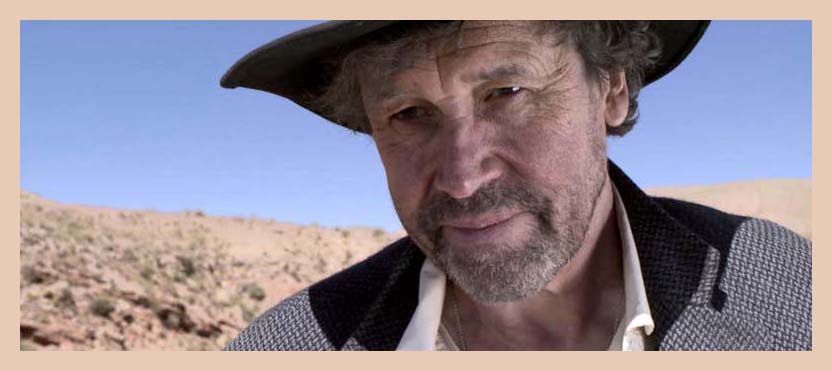
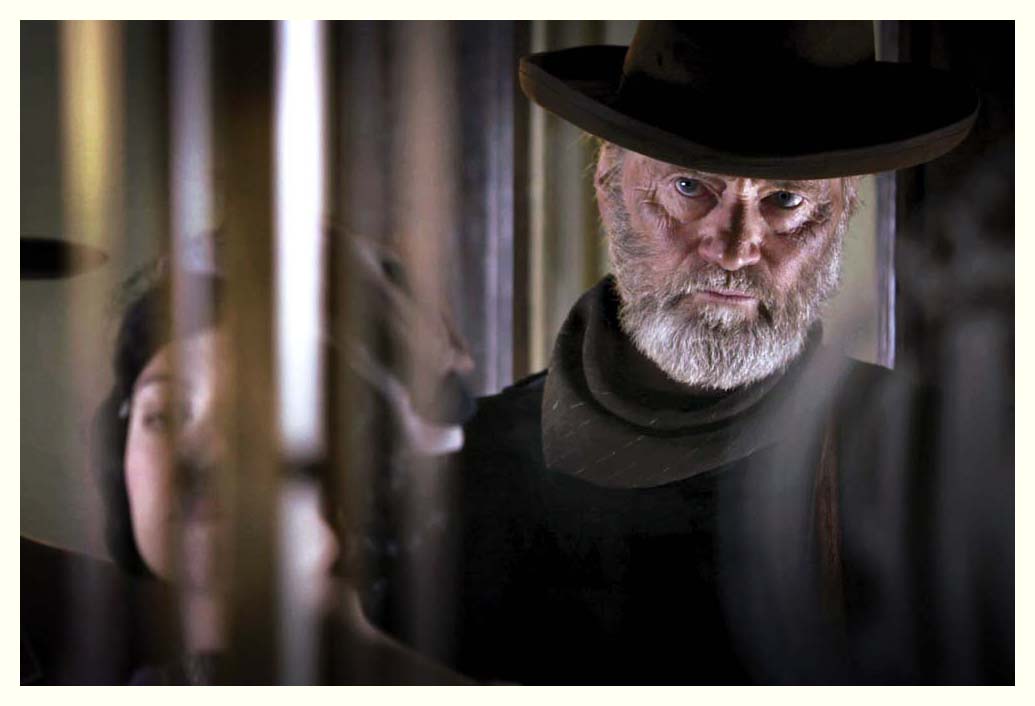
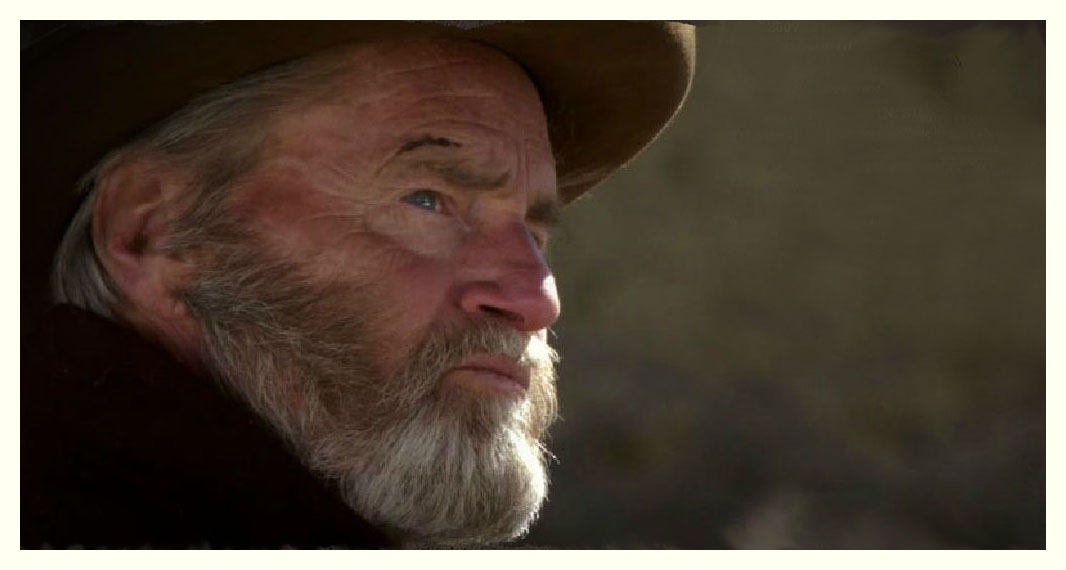
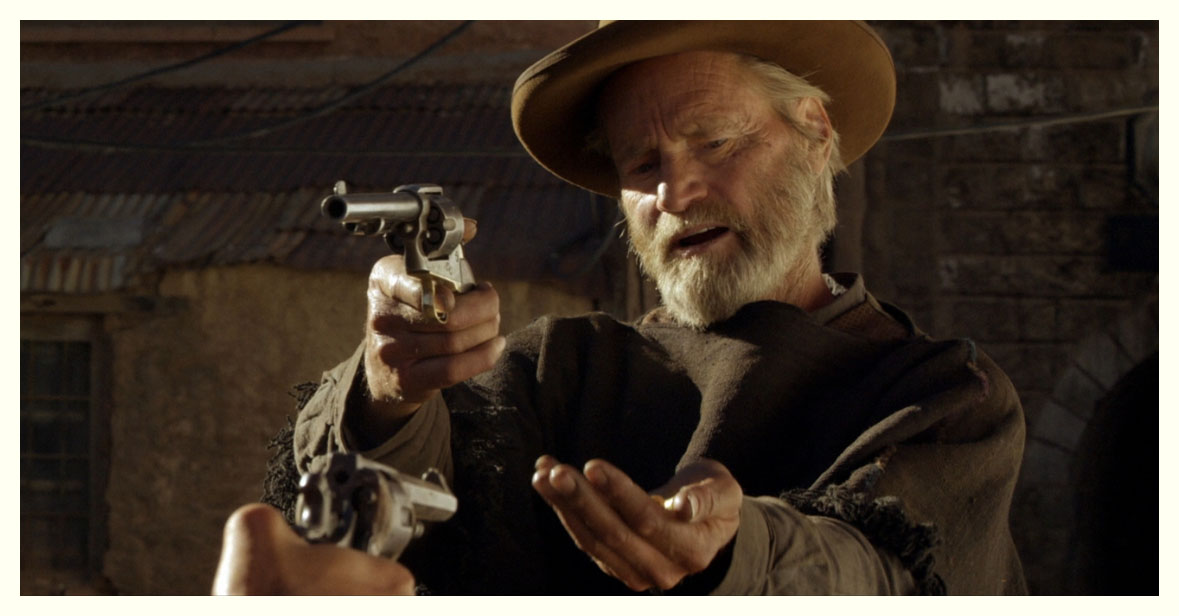
must watching is Shepard, whose mug should be in the
dictionary next to "grizzled." Indeed, the Pulitzer
Prize-winning playwright is a woefully underrated
actor."
Marshall Fine, Hollywood and Fine:
"For a grittily entertaining and thoughtful example of just how good a western
can be, look no further than Mateo Gil’s accomplished 'Blackthorn,' an outlaw
tale that is at once exciting and elegiac, elegant and earthy. Part of that has
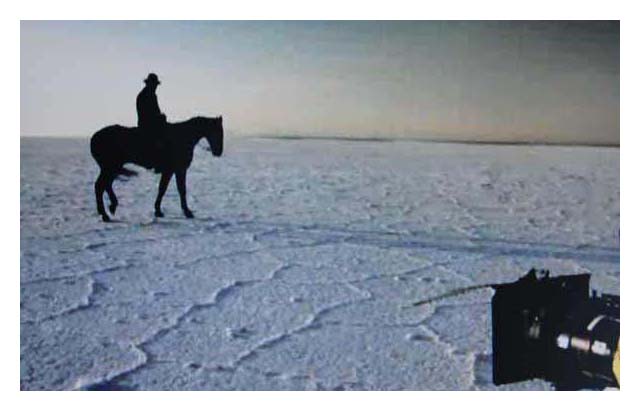
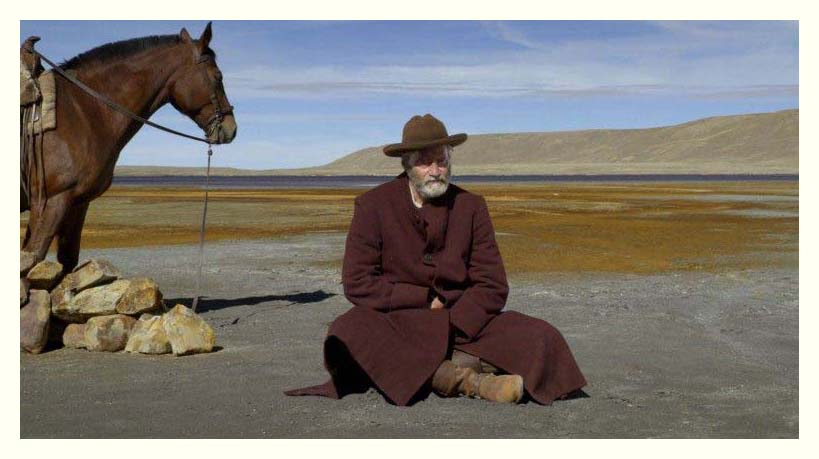
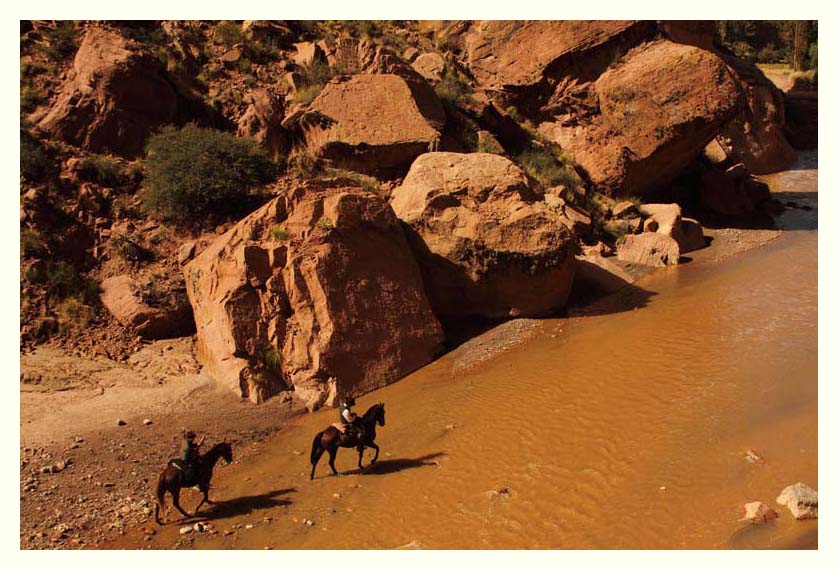
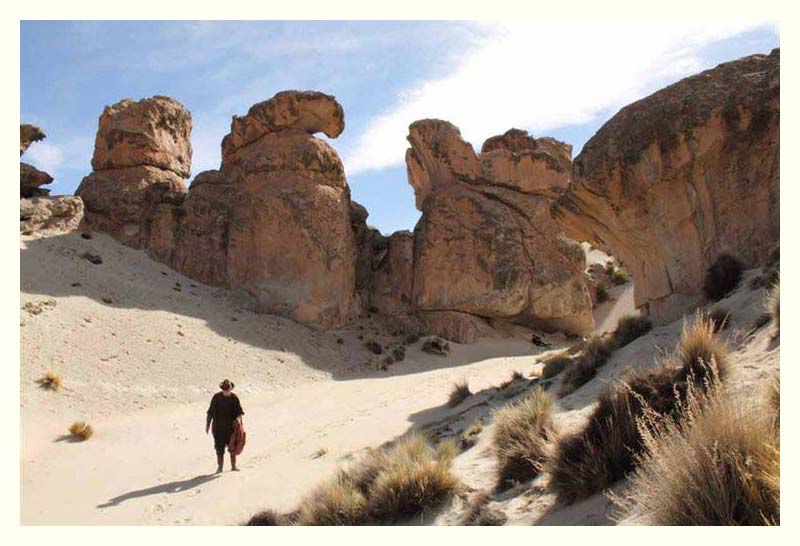
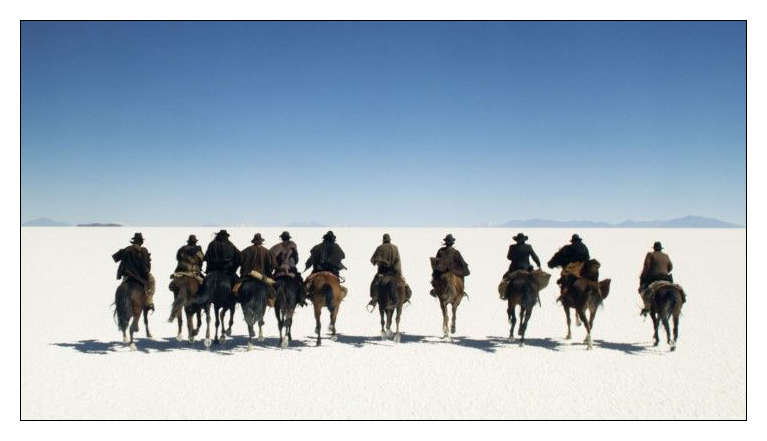
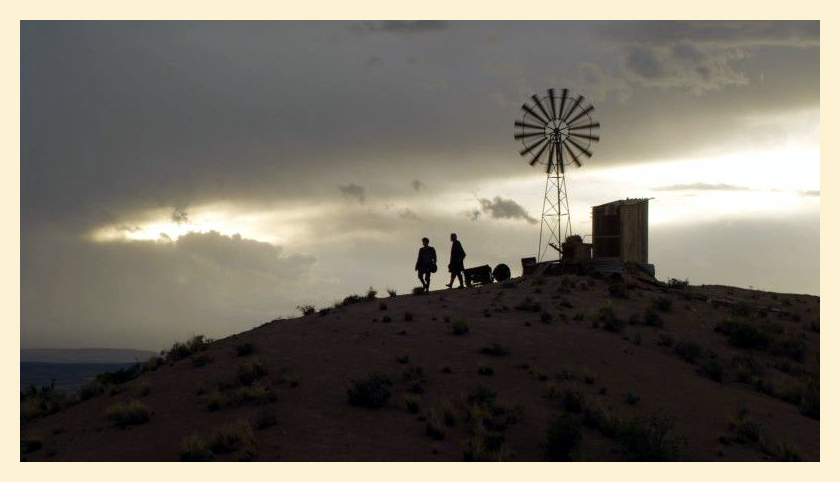
to do with Gil’s vision, fleshed out by the ravishing Bolivian locations where
he filmed. But a good deal also has to do with the central performance – as good
as he’s ever been – by Sam Shepard, one of our greatest playwrights who started
out (and probably still remains) a cowboy at heart.... His Cassidy isn’t a
brooder, just laconic – but when he delivers an opinion, it comes with a sharp
edge. There’s also a sadness and regret that Cassidy works to suppress but which
Shepard allows to peek through nonetheless... 'Blackthorn' is a rousing and
involving film, featuring what could serve as a terrific valedictory performance
for Sam Shepard, if he were ready to quit acting. Hopefully, he won’t; as
'Blackthorn shows', he still has a lot to offer."
Tony Timpone, Fantasia Film Festival:
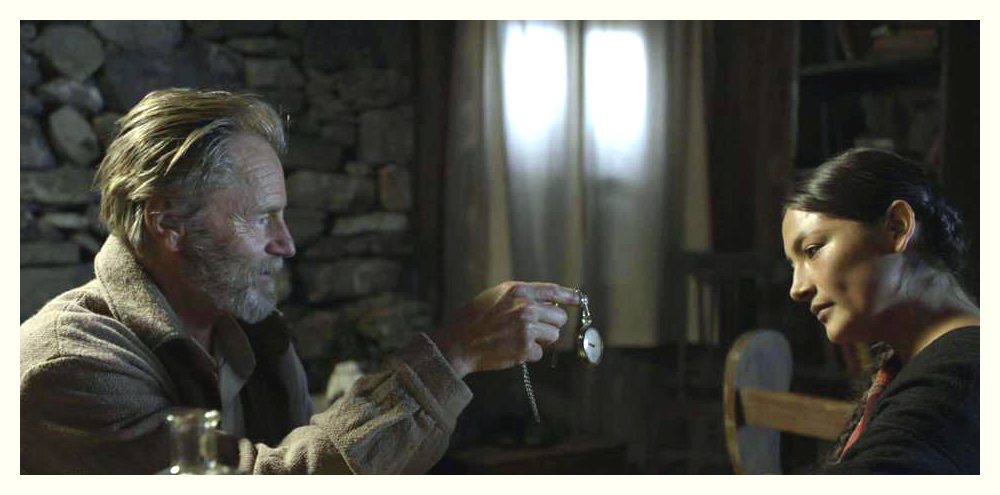
"Shepard, never better, even sings his own raspy songs on the soundtrack... With
his contemplative stare and sparse dialog, playwright Shepard conveys all these
subtle emotions beautifully."
Joblo's Movie Emporium:
"Sam Shepard is one of the most genuine actors working in film today. When we
first meet him as the fugitive, there is an unsettling fire within him. It is a
sort of sadness that is worn and broken but he is not lost, his composed
strength is very powerful. The way he carries himself on-screen is perfect for
this aging cowboy. He speaks volumes within his silence, and when the words do
arrive he is undeniably charismatic in Butch Cassidy’s skin. He carries the film
on his capable shoulders and we, the audience, are able to connect and
sympathize with his loss and desire to return home. This is a stunning,
understated performance that should be remembered."
Ian Buckwalter, NPR.org:
"Even if some of the film's weaknesses were more prominent, though, they'd be
mostly forgivable in light of Sam Shepard's powerful performance in the title
role. He perfectly blends the mischievousness of the character with the sadness
of age and exile. His Cassidy is magnetic and intimidating, and his smoky, reedy
voice conveys the dried-out fatigue of someone who has spent too long out under
the unforgiving prairie sun."
Betsy Sharkey, Los Angeles Times:
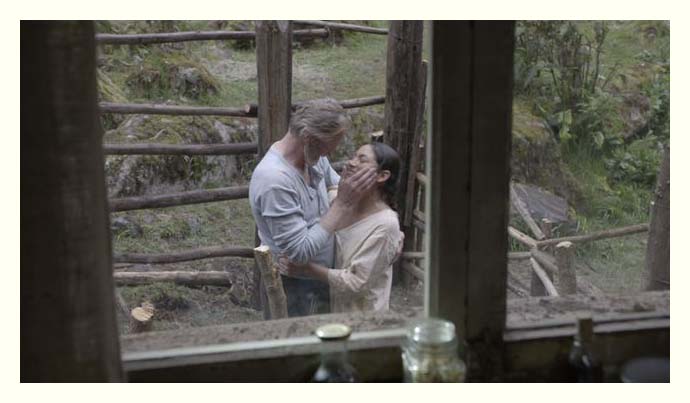
"In the opening scenes of 'Blackthorn,' the old desperado who gives this mostly
satisfying western its name is bent over a letter, writing of coming back home
to the U.S. Though he's grown gray, he remains split-rail hard, suffers no fools
— he's still plenty fiery too, if the girl in his bed is any indication.
Naturally, the character is played by Sam Shepard, who wears the dust, the
boots, the bravado and the rest as if they were designed for him alone... The
film reminds just how arresting an actor Shepard can be. Like Blackthorn, he's
only gotten better with age."
Eric Hynes, Time Out New York:
"If Butch were to live into his senior days, he’d absolutely have to be played
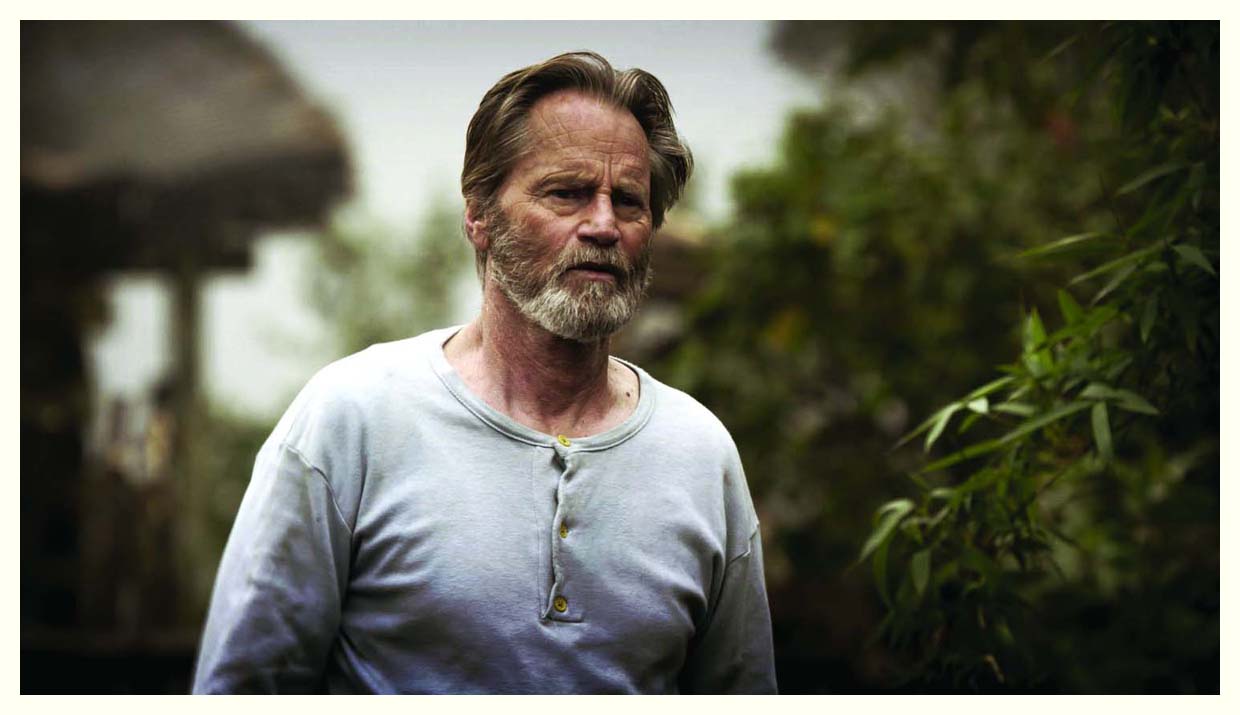
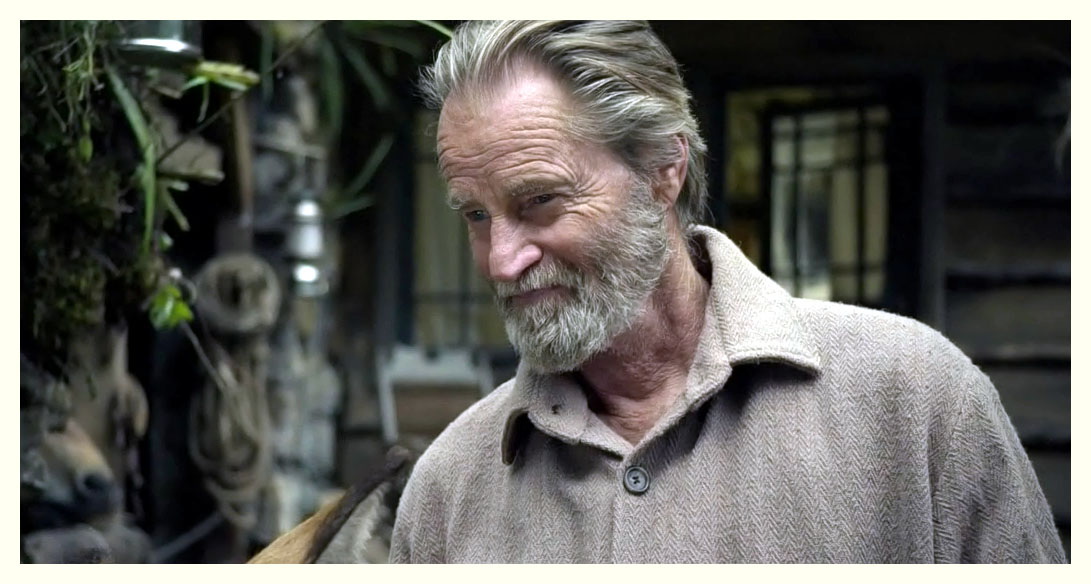
by Shepard. Wrinkled, leathery and densely carpeted in a salt-and-pepper beard,
the 67-year-old playwright and actor still exudes intellectual mischief and
hard-stare sex appeal; his self-styled ruggedness is a perfect match for an
infamous gringo living incognito. It’s his best screen work since 'The Right
Stuff'."
Mark Holcomb, Village Voice:
"Director Mateo Gil finds a good balance between understated drama and the
grandiose Bolivian landscape, but Blackthorn’s real draw is Shepard. He plays
the aging rogue with a wily mix of restlessness and comic irascibility."
Edward Douglas, Comingsoon.net:
"Sam Shepard's performance is a revelation, one of the veteran
actor's finest hours as he plays the title character as a tough man's man with a
softer side we get to see in the quieter moments at home with his native
girlfriend."
Steven Rea, Philidelphia Inquirer:
"Sam Shepard, quiet, watchful, and wonderfully in the moment - his performance
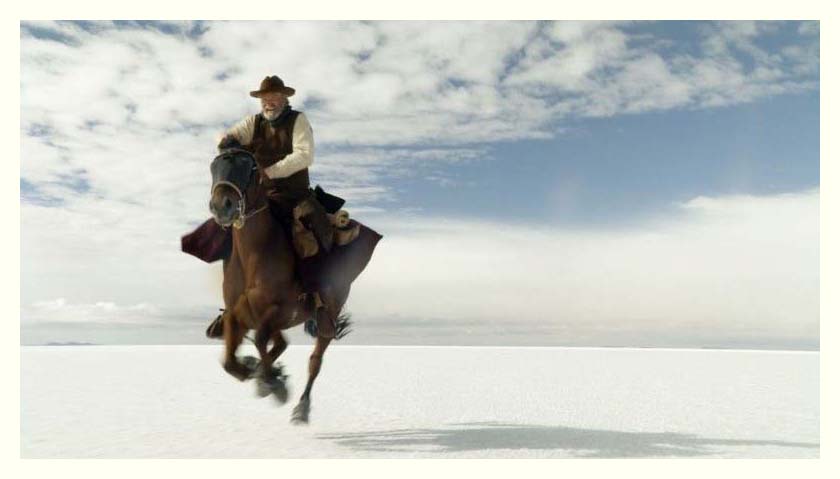
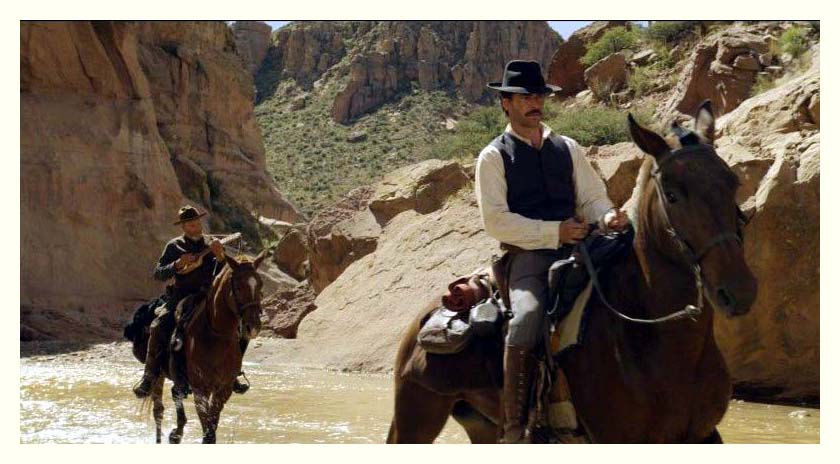
is one to remember... Watching Shepard work his pony down a snaking
mountain pass, playing a mandolin and singing the blues, or seeing him sitting,
stone-still, beneath a railroad water tank, waiting for something to happen -
these are scenes to be cherished, from an actor who has found the soul of the
character he's playing."
Genna Terranova, Indiewire:
"Mateo Gil makes a solid English-language debut
with this sublimely shot and well acted tale set in the remarkable landscapes of
Bolivia. Sam Shepard gives a riveting performance as the weathered, mysterious,
and unsentimental Blackthorn, gracefully revitalizing the legend of history's
favorite outlaw."
Downtown Express:
"Finely crafted by the Spanish team of Mateo Gil
(director) and Miguel Barros (screenwriter)... As
impossible as it may seem, the film steers clear of
clichés.... the story, which moves as slow and stately
as its mature star, still packs plenty of original
twists, action and surprises. Fans of Shepard will glean
right off the bat why he took the part. The
actor/playwright, so long identified with the west, fits
his iconic character as though he’d worn it all his
life. It’s a career-defining statement. He even sings
several folk songs on the soundtrack. Seeming like he’s
having the time of his life, Shepard turns in some of
the best acting of his career."
Kim
Hanson, Bridgeport Examiner:
"Sam Shepard fills the title role with grizzly gravitas,
exploring the life of a man who has learned the real
costs of survival and loyalty and is about to have those
lessons tested, once again...
Breathtaking cinematography and an outstanding
performance by Sam Shepard make this western memorable."
Paste
Magazine:
"The great Sam Shepard invests the role with an
understated dignity and gravitas. Perhaps too much so to
be historically accurate, but historical accuracy isn’t
what Gil is after here. 'Blackthorn' is a character
study, and Shepherd is one of the most interesting
actors of his generation. His silences are fascinating,
and his clipped (and infrequent) speech escapes his lips
only reluctantly."
Dustin J Trost, Montgomery News:
"The driving force behind “Blackthorn” is definitely Sam
Shepard. He brings to life the lonesome old man who is
tired of living in solitude and is ready to come home...
Even with its minor flaws and disappointing ending,
'Blackthorn' delivers a western worthy of the genre. Sam
Shepard delivers an award-worthy performance as the
legendary Butch Cassidy late in life, and definitely
lives up to the reputation."
Mark
Olsen, Los Angeles Times:
"Shepard's
performance is equal parts tender and lonesome, fearsome
and commanding."
Erica, Abeel, Huffington Post:
"Sam Shepard is a magnificent craggy presence as an
aging, vinegar-y coot, still polishing his legend. (And
of course he does his own riding.) The premise is
ingenious and adroitly handled. The locations are
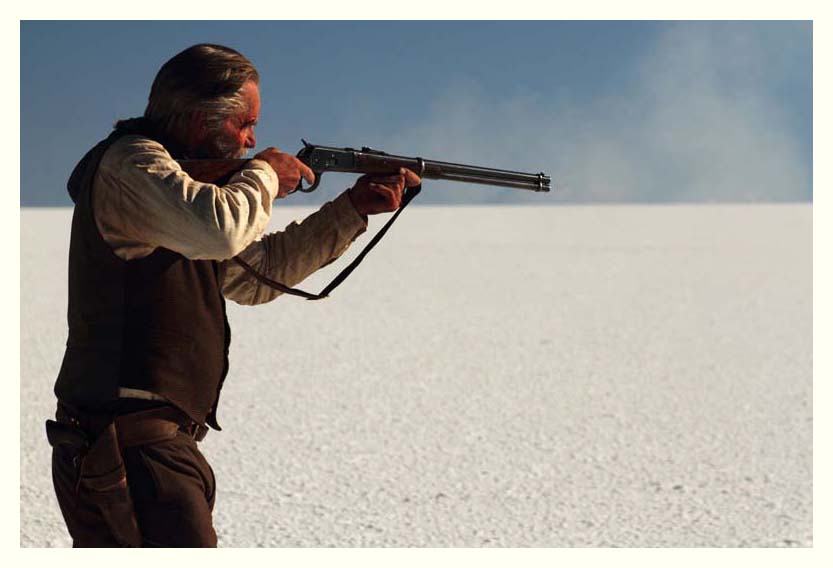
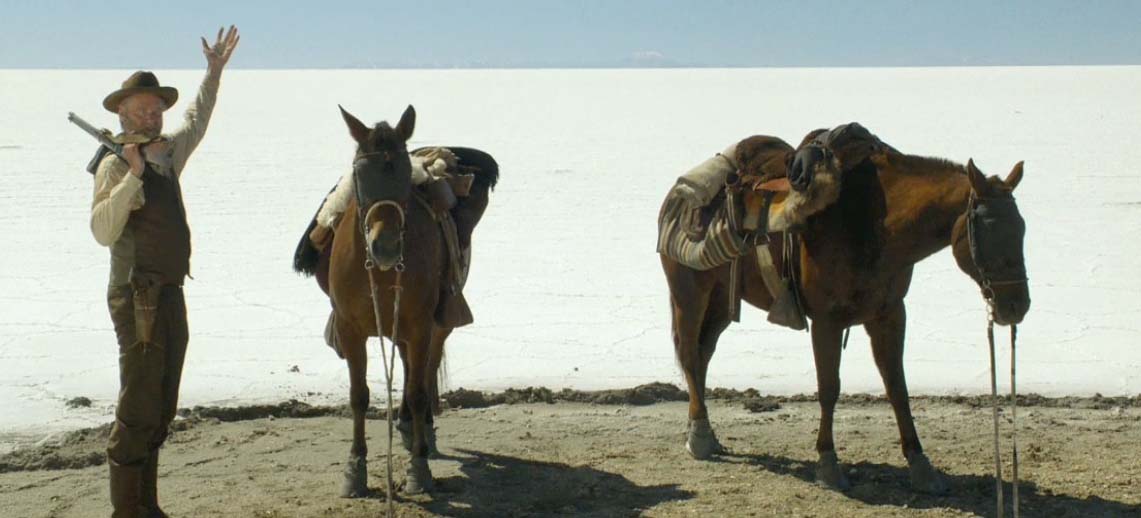
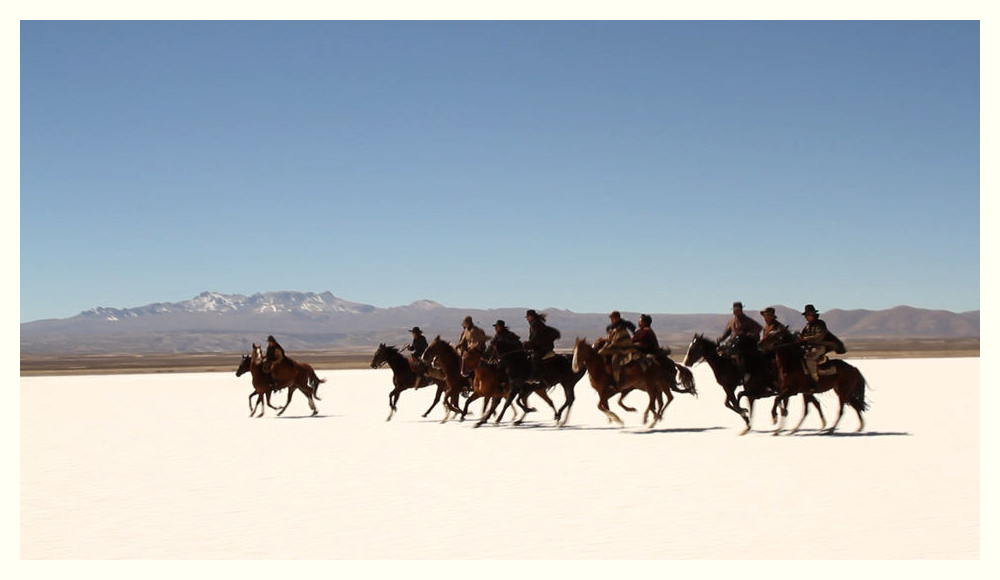
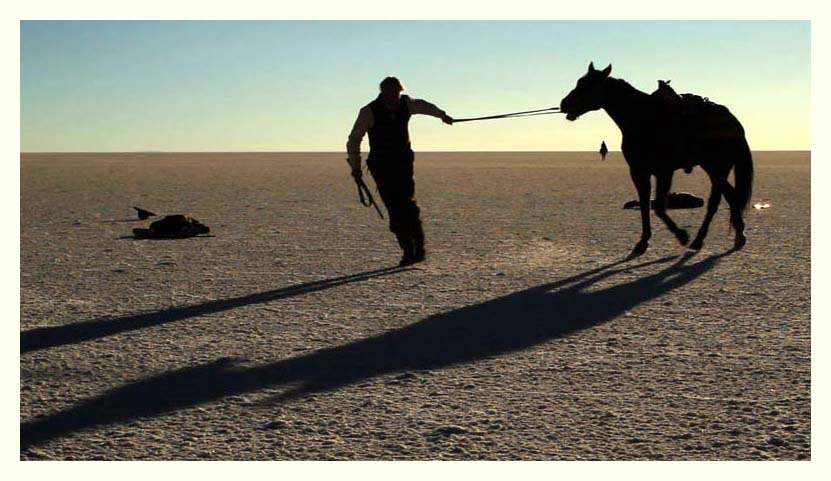
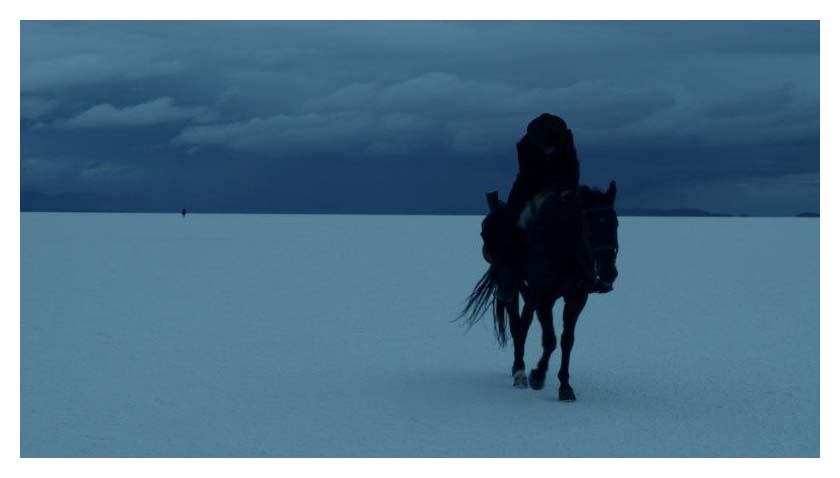
spectacular, especially the endless salt flats of the
Bolivian frontier."
Matt
Singer, IFC.com:
"The simple but effective 'Blackthorn' casts playwright
and actor Sam Shepard in the title role, and if ever a
man deserved the nickname "Butch," it's Sam Shepard.
Gruff and silvered but still handsome at age 67, he
looks every bit the badass cowboy in the autumn of his
years. The film puts most of the dramatic load on
Shepard's grizzled shoulders; his understated line
readings carry most of the film while beautiful frontier
cinematography by Juan Ruiz Anchía does the rest.
Shepard's worldweary performance and Anchía's stark
camerawork elevate the material beyond your standard
revisionist Western fare."
Beth
Accomando, KPBS.org:
"Shepard, who is also an extremely gifted playwright, is
strong enough to make this performance work and to win
us over."
Joe
Williams, St. Louis Dispatch:
"The great, grizzled Shepard conveys an autumnal,
end-of-the-trail weariness as he watches his horizons
grow dim."
Roger
Ebert, Chicago Sun-Times:
"This story is well-acted by Sam Shepard, who I have
never seen unconvincing. There's a dash of Kris
Kristofferson in his performance, as when he ambles
through the country singing rusty old songs."
The
Saratogian:
"Who better to play the laconic, sun-crinkled,
been-there-done-that outlaw than Sam Shepard, himself a
national icon of weathered taciturnity and cool?
Shepard’s Cassidy is a gunslinger for a modern era,
wiser, older, rueful, and even meditative - more in the
melancholy mold of Eastwood’s 'Unforgiven' than anything
from George Roy Hill. And while the Spanish screenwriter
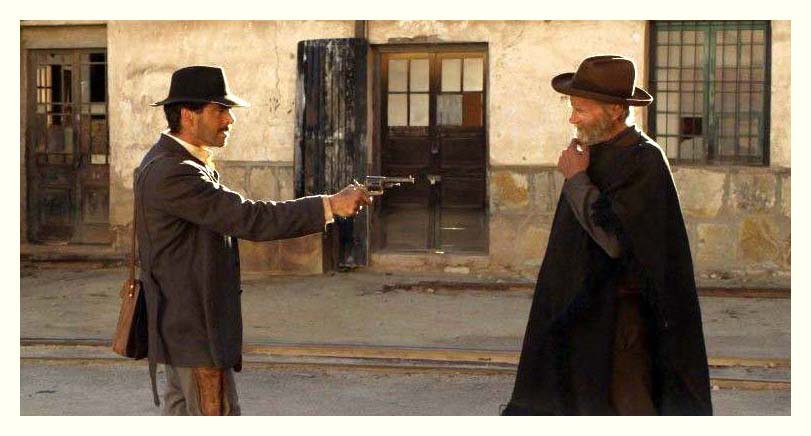
and director Mateo Gil honors all the familiar tropes of
the Western genre - wild horse chases, hideaways,
showdowns, and lots of stunning
makes-you-feel-awful-small wide-open vistas, it’s the
quiet stuff Shepard does with his character that makes
this neo-Western stick to the ribs."
Sara
Maria Vizcarrondo, Boxoffice Magazine:
"It's a trenchant modern western and fans of the genre
should embrace it for more reasons than just the
presence of the epic Sam Shepard who, by the way, owns
this Butch Cassidy."
Liz
Smith:
"This has to be
the role Sam Shepard was born to play. There is a
stillness to his performance that is mesmerizing, even
in action sequences. Shepard himself says that “This the
first time I felt completely calm in front of a
camera... Shepard is Bogie in 'The Big Sleep' or
Robert Mitchum in 'Out of the Past' or Dick Powell in
'Murder My Sweet.'"
Bob
Fischbach, World Herald:
"One of the chief pleasures of 'Blackthorn,' a movie
that supposes Butch Cassidy and the Sundance Kid did not
die in Bolivia in 1906, is seeing Sam Shepard on the big
screen... Shepard is a natural as the hardened loner,
maybe slowed with age but able to summon up the smarts
and the sudden moves we remember Butch had so long ago.
In a relatively taciturn role, he does a nice job of
conveying Blackthorn's internal makeup."
Melissa Harmon, Movie Buzzers:
"Sam Shepard has a fantastic ability to convey his
emotions without speaking. Through his tough exterior,
he's able to portray an empathy for people that the
character had in real life."
Devin
D. O'Leary, Alibi.com:
"Mostly, it’s a character study on the part of Shepard,
who does bang-up work as the grizzled gunman, the
world-weary warrior, the semi-repentant rebel. Though he
allows the story and the characters to spend much time
in surly self-reflection, director Mateo Gil isn’t
totally interested in dirty realism. Instead, his crisp
digital lensing lingers on the spectacular landscape of
Bolivia - from the rounded mountaintops to the
dead-level salt flats. And when it isn’t luxuriating in
the landscape, the camera is studying the craggy, calm
face of Shepard. This is a clue that - for all his
revisionist “real west” leanings, Gil still hungers to
capture the cowboy myth... Barros’ script is simple, but
features just enough twists and turns to keep the
entertainment moving and the characters evolving. The
supporting cast, particularly Stephen Rea as a
burned-out Pinkerton man, makes even the small roles
memorable. The real star, though, is Shepard. Everyone
involved seems to know this and affords the legendary
actor enough time and space to give his character the
lived-in feel of a well-worn but still-tough cowboy
boot."
Colin
Covert, Minneapolis Star Tribune:
"Butch Cassidy rides again in 'Blackthorn,' but
this time he's grayer, warier, wiser. Sam Shepard steps
into the iconic role, and he fills Paul Newman's cowboy
boots spectacularly."
Mick
LaSalle, San Francisco Chronicle:
"By his early 40s, Shepard already carried an aura of
deep, lived-in history, and by now he is like a living
monument, who can just sit and say nothing and make you
think, wow, this guy has seen things. So what better
actor to play a notorious outlaw who has grown into his
regrets and yet is still dangerous?"
Ronnie Scheib, Variety:
"Shepard effortlessly incarnates the Western loner on
the lam, his every gesture bespeaking distances to
travel, dangers to circumvent and respites to savor."
Ty
Burr, Boston Globe:
"Playing the aging outlaw Butch Cassidy, Sam Shepard is
the nominal star of 'Blackthorn,' and he’s fine -
grizzled and laconic in the best western tradition."
Marc
Savlov, Austin Chronicle:
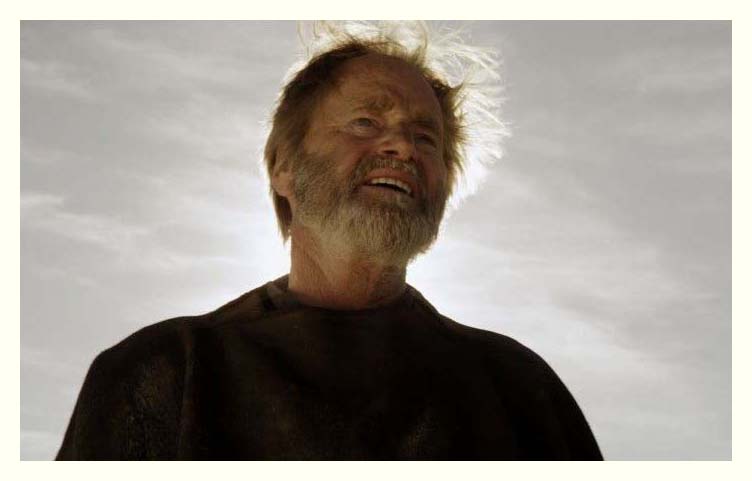
"Shepard has aged himself into a grizzled and laconic
icon, and his Cassidy/Blackthorn is tough as leather and
still handy with a six-shooter, but bone-weary and
aching to be done with this decades-long game of
hide-and-seek."
Nick
Shager, Slant magazine:
"Shepard plays the role as "a crotchety ex-badass with a
no-nonsense attitude and a resignation to his
potentially dire fate at the hands of a six-shooter...
He's a grizzled old loner who periodically indulges in
memories of happier times alongside his famous
compatriot... 'Guess we can't be blamed for getting
older,' muses James Blackthorn (Shepard)."
J.R.
Jones,
Chicago Reader:
"Shepard is the whole show here, as weathered and
elemental as the harsh Bolivian locations."
Kirk
Brokaw, Independent magazine:
"James Blackthorn is Butch 20 years later, fully
embodied by Sam Shepard in an irascible, full-tilt
performance that’s the best work of his career. Shepard
is now old enough, grizzled enough, and ornery enough to
play Butch writ large, and the character finally has the
legs of a legend. Call it intuition, age, or luck, the
actor who Shepard may frequently remind you of is Walter
Huston in his Oscar-winning role in the 1948 "Treasure
of the Sierra Madre"... Like Huston, Shepard has
come to carry a lot of mileage in his face. He’s a hoot
on horseback twanging a guitar and talk-singing a couple
of original tunes... Like most of the great Western
actors, he’s an authentic bent hero, a flawed but
honorable cuss, a damn-your-eyes outlaw that just won’t
roll over and die. Walter Huston would have liked
Shepard’s Butch Cassidy a lot."
Jason
Bailey, DVD Talk:
"Shepard's presence in a movie like this is the very
definition of "reassuring." He gives the character a
weary, grizzled impatience; there's not a false note in
the performance, which even includes some inspired
warbling."
Jordan M. Smith, Ioncinema.com;
"Shepard has put forth a wonderful performance
here, portraying an elder reminiscing on the past, only
hoping with what little time he has left he can do right
by his friends now passed. Shepard does so with
surprising nuance and pleasant bitterness."
Joseph Walsh, CineVue:
"Shepard gives an extremely moving performance as
Cassidy/Blackthorn, expertly balancing the traditional
romanticism of life in the Old West (and the Old South)
with a believable portrayal of an old man yearning to
return home."
Andy Lea, Daily Star (UK):
"With Paul Newman no longer with us, no other actor
could have fitted so snugly into the legendary outlaw's
old boots."
Will Leitch, Yahoo Entertainment:
"Shepard, as you might suspect, is a terrific Butch,
weathered but still smart, savvy and, deep down, oddly
optimistic about the world, in spite of it all. It's a
perfect part for him, and 'Blackthorn' provides
considerable pleasure just in watching Shepard ride a
horse and bark around."
Andrew L. Urban, Urban Cinefile:
"Sam Shepard delivers a terrific, dry performance as the
older Butch Cassidy, his stoic view of life honed by
years of reflection and self realisation. It's a well
written screenplay and director Mateo Gil makes the most
of it."
Joe Williams, St. Louis
Post-Dispatch:
"The great, grizzled Shepard conveys an autumnal,
end-of-the-trail weariness as he watches his horizons
grow dim."
Beth Accomando, KPBS.org:
"Director Mateo Gil and writer Miguel Barros deliver a
solid western that's as simple, straightforward, and
unadorned as its title character. It's well crafted as
opposed to passionate but Shepard has such a
no-nonsense, commanding screen presence that he makes
the film well worth checking out."
Lou Lumenick, NY Post:
"With Paul Newman gone, you couldn’t ask for a
better senior-citizen representation of Butch Cassidy
than Shepard. In his best performance since 'The Right
Stuff' turned him into a reluctant movie star, Shepard
makes 'Blackthorn' worth seeing."
Mark Holcomb, Village Voice:
"Director Mateo Gil finds a good balance between
understated drama and the grandiose Bolivian landscape,
but Blackthorn’s real draw is Shepard. He plays the
aging rogue with a wily mix of restlessness, and comic
irascibility."
|